
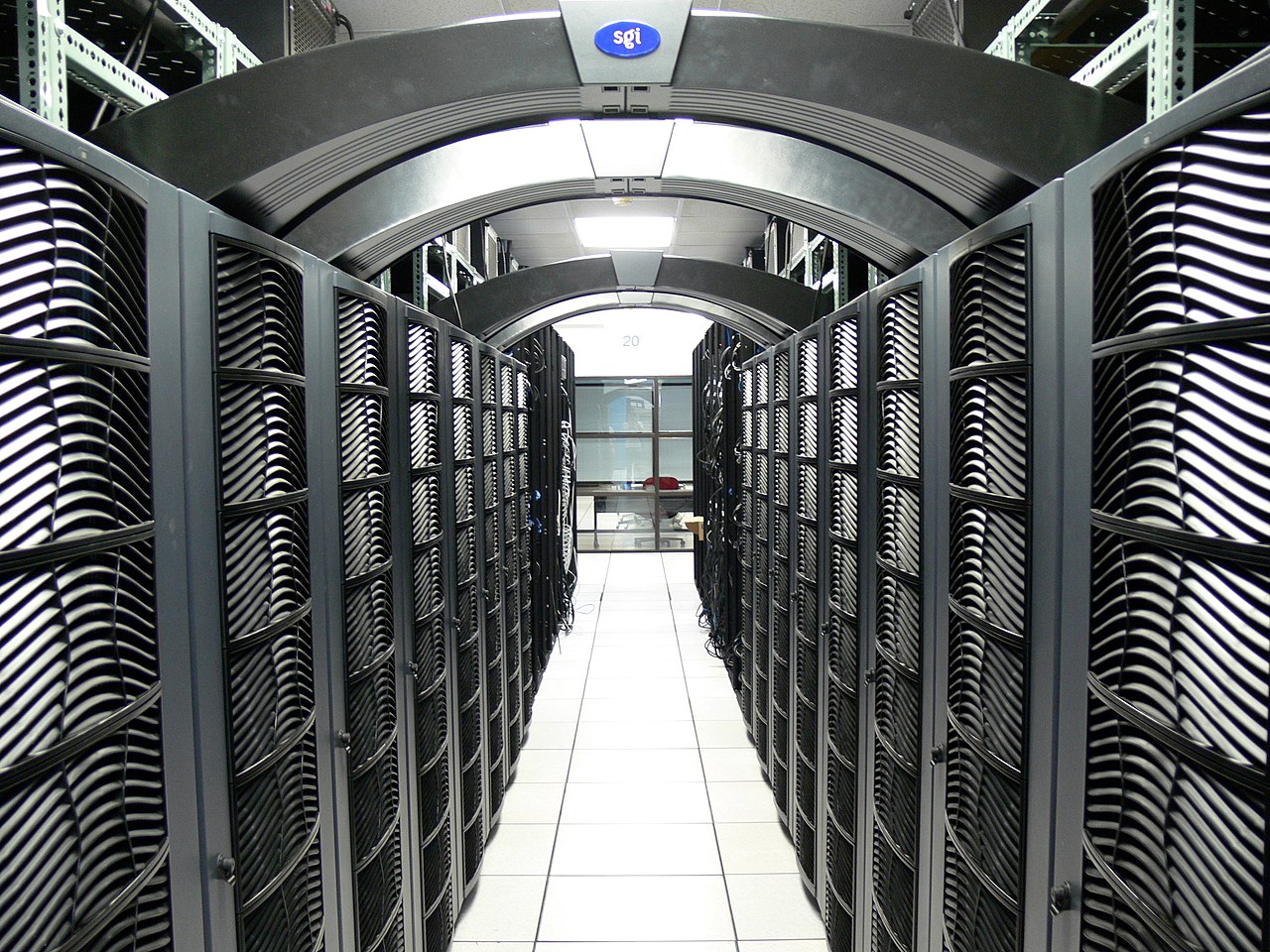

Every day seems to bring a new headline about advances in artificial intelligence (AI). But when it comes to climate change, AI is a two-sided coin, with tremendous potential to benefit the environment, even as the data centers powering it consume vast amounts of water and energy. How will these two opposing dynamics balance out—or can they?
The benefits of AI
Optimization
Because AI is able to process and analyze huge amounts of data, it can determine the most efficient ways for the power grid to store and manage energy. By integrating energy-use trends, weather conditions and real-time data, AI can predict demand for energy and where it is needed; it can also direct the energy to the areas of need. This not only prevents wasted energy; it can also help better integrate renewable power into the grid. In addition, as AI continuously analyzes conditions in the overall system, it can spot inefficiencies and potential problems. In buildings and industrial facilities, it can discern and control conditions to optimize energy efficiency.
Alexis Abramson, dean of the Columbia Climate School, conducts research that refines the analysis of energy efficiency. “We take the electricity data that your utility is going to collect anyway and ask simple questions about a building,” she said. “What is the square footage? How many floors above ground? Where is its location? What is it used for? Is it a home? A coffee shop? An office building? And with this data, we’ve developed a physics combined with machine learning model that can disaggregate that load.” In other words, a coffee shop, for example, would be able to determine how much of its energy goes specifically toward refrigeration, lighting or heating and figure out where and how it could be more efficient.
Prediction
AI algorithms, trained on decades of weather data from satellites, radar and historical records can detect patterns and predict weather more quickly and precisely than previous prediction models. Because some AI weather models can provide forecasts up to 500 times faster than traditional ones, scientists are able to test thousands of possible scenarios and find the most plausible ones. AI-trained models can also predict conditions for very specific areas or microclimates, which can help populations prepare for extreme weather events like hurricanes or heat waves and facilitate disaster relief. Precise weather forecasting also helps farmers know when it’s best to plant, irrigate, fertilize and harvest so they can optimize their yields.
Learning the Earth with Artificial Intelligence and Physics (LEAP), an NSF-funded center at Columbia, is advancing the accuracy of climate predictions with physics and machine learning (a branch of AI that focuses on building systems that learn from data). This will allow us to “better predict extreme weather events and also improve near-term climate forecasts. It’s helpful to be able to forecast where a hurricane is going to hit in 11 days, but that’s been challenging to predict in the past. Having more accurate insight that far in advance would be very useful,” Abramson said.
Monitoring
AI can monitor data from water resources such as reservoirs and aquifers, along with consumption patterns and weather forecasts, to predict water shortages and optimize water distribution. It can also monitor sensors to identify potential leaks in aging infrastructure and track water quality in real time.

Using data from satellite imagery and radar, AI can monitor deforestation and land-use changes as they occur. And because it can distinguish between natural and man-made changes, it can facilitate swift intervention if illegal activity is detected, preventing deforestation. AI is also used to monitor wildlife and at-risk species. With data from millions of cameras, it can determine where wildlife demographics are changing. Cameras armed with AI and night vision can help stop poaching. Passive acoustic monitoring, combined with AI, analyzes wildlife sounds to pinpoint wildlife movement and threats.
AI can also help detect methane, a greenhouse gas more than 80 times as potent as carbon dioxide over the 20 years after its release. In conjunction with satellites using spectroscopy, AI has been trained to monitor and identify methane emissions on Earth. The Environmental Defense Fund unfortunately lost contact with its MethaneSAT last year, but the data it collected over one year identified oil and gas methane emissions that were four times higher than the EPA had estimated, and pinpointed their sources. One congressman is using this data to pressure oil and gas companies to measure and reduce their methane emissions.
Research
AI’s coding capacity enables scientists to format data quickly and construct complex models to facilitate their research. Marco Tedesco, a researcher at the Lamont-Doherty Earth Observatory, which is part of the Columbia Climate School, and adjunct scientist at the NASA Goddard Institute for Space Studies, said he uses AI to write draft code for very specific research tasks: “Right now, I have 3,000 papers I’ve collected on climate justice and AI. The AI models are dividing the papers so to enable a semantic analysis to identify topics, subjects, and how they are discussed,” Tedesco said. “Are there practical suggestions for action? What are the gaps in the academic research and how do we fill the gaps with policies that rectify them?”
In addition, because AI can analyze millions of combinations of molecules in seconds, it is facilitating research into new sustainable materials for clean energy and carbon removal. Scientists are using AI to research next-generation battery materials. For example, researchers at the New Jersey Institute of Technology used AI to discover new sustainable and cost-effective materials that could provide an alternative to lithium-ion batteries. AI is also being used to come up with more efficient, sustainable and less costly materials to capture carbon dioxide and boost the efficiency of solar cells. These discoveries will increase the efficiency of solar energy and battery storage and potentially lower the cost of carbon capture.
AI’s negative impacts
The global AI market, valued at US $390.91 billion in 2025, is expanding rapidly and projected to reach US $3,497.26 billion by 2033. Most AI models depend upon huge data centers that use an enormous amount of energy and water. Could their consumption offset the benefits AI provides?
Energy consumption
Because of AI’s rapid expansion, data center energy consumption could reach 1,050 TWh this year, according to the Brookings Institute; if this consumption were a country, it would be the fifth largest energy-consuming country in the world. The U.S., the world’s largest data center market, accounts for 45% of global data center energy consumption. In 2023, data centers consumed about 4.4% of total U.S. electricity and are projected to need between 6.7% and 12.0% by 2028.

As of 2024, natural gas supplied 40% of the electricity for U.S. data centers. Wind and solar provided about 24% while nuclear power accounted for 20% and coal about 15%. Because data centers must respond quickly to queries, fossil fuel plants, which provide base power, are being kept online longer than expected; in 2025, 15 U.S. coal plants scheduled for retirement remained in operation to power data centers.
This increase in electricity demand raises carbon emissions and puts added stress on our aging grid. One AI task can use 1,000 times more electricity than a traditional web search. In the U.S., many data centers are being built in Virginia and Texas, where the huge demand for electricity is pushing grids to their limits, and leading to conflict with communities that object to the sound, light and environmental pollution, as well as their rising electrical bills. In areas near data centers, electricity can cost 267% more in a month than it did five years ago, and these costs are being passed along to customers.

While AI assistants such as ChatGPT or Gemini depend on these centers, Tedesco is choosing research models that have been built in-house. In other words, the machine learning they use is a downloaded software program that runs on their local computers like any other software. Tedesco said, “Of course, in some cases you have to use Google because they have GPUs [graphics processing units, or specialized computer chips designed to handle many tasks at once] and we do not. So you might have to study climate change by using something that is making climate change worse. This is the paradox of AI and climate. And this is why, when we can, we make choices to develop these tools internally without running anything externally.”
Additional greenhouse gas emissions
Greenhouse gas emissions are increasing rapidly also due to the embodied emissions in AI hardware—the chips themselves. Semiconductor manufacturing, one of the most resource-intensive industries, consumes huge amounts of energy, water and chemicals. Microchip production depends on extremely potent greenhouse gases, some of which leak into the atmosphere. Processing the materials to make the chips requires a great deal of energy, and the manufacturing facilities themselves need vast amounts of electricity to operate the machines and to maintain an ultra-clean environment with tightly controlled climate and humidity. Processing the raw materials for the chips also results in greenhouse gas emissions.
Water use
Data centers also require huge amounts of water for cooling, which can impact local water resources. In the U.S., many data centers are being built in areas that already have high water stress. According to Brookings, in the U.S., a standard data center uses 300,000 gallons of water a day, or the amount that 1,000 households might consume; large centers might use 5 million gallons a day, or what a town of 50,000 might need. Data centers also consume water indirectly because the electricity they require often comes from power plants using water-driven steam turbines to produce electricity.

One study found that to meet data centers’ demand, communities in the U.S. will need up to $58 billion dollars for new water infrastructure. Water resources are already limited and since 2022, two-thirds of data centers have been built in water-stressed areas. This is leading to impacts on agriculture, drinking water and water bills.
E-waste
AI is also adding to the rapidly growing amount of global e-waste. In the race to develop ever faster and more powerful GPUs, whenever a new one is developed, older ones are discarded. GPUs and servers are replaced every 2-5 years or sooner if new models are developed. One study found that AI could result in an added 1.2 million to five million metric tons of e-waste on the planet by 2030.
On the benefits and drawbacks of AI
Tedesco believes there will eventually be policies to regulate the drawbacks. “I would say that data centers will continue to grow, and there will be, at some point, a very strong regulatory call from governments,” he said. “If there isn’t, I think it would be foolish in terms of the business model, because the opposition from people is demanding solutions. These need to be discussed and adapted with local populations and need to have a regulatory system. But until then, I think the potential negative impacts of data centers on pollution, water, electricity and on the stress of the financial market in some areas, is going to leave a large footprint on many things, which is going to be hard to remove.”
Abramson is more sanguine. “I’m not as worried about what some people are predicting to be this massive increase in energy consumption due to AI and data centers,” she said. “There’s a real upside in using AI to reduce energy waste. Of course, we’re not going to fully offset the increase in energy use because running AI will consume energy. But I think the impact, especially the increase in fossil-fuel based energy consumption is overblown. Globally, at least, more than 90% of new energy generation being added to the grid is renewable. It doesn’t economically make sense to build fossil fuel plants in most parts of the world anymore. So, as we’re increasing our need for electricity for data centers electrification, there’s a stronger case for ensuring that additional electricity comes from clean energy.”
In fact, Lisa Sachs, director of the Columbia Center on Sustainable Investment at the Climate School, believes data centers could actually spur the clean energy transition. According to Sachs, “To view data centers as mainly energy-intensive off-takers misses their systemic potential as digital and energy infrastructure multipliers, serving as backbones for both grid and digital transformation. With appropriate cross-sectoral planning frameworks, policy development, incentives and market design, data centers can help resolve the very constraints that hold back clean energy deployment, energy system efficiency and universal digital access. In doing so, they can help deliver on national and regional climate and broader sustainable development goals.”







Tinggalkan Balasan